Uzhhorod—City on the Uzh: the Ancient City of Zacarpattia, Ukraine.
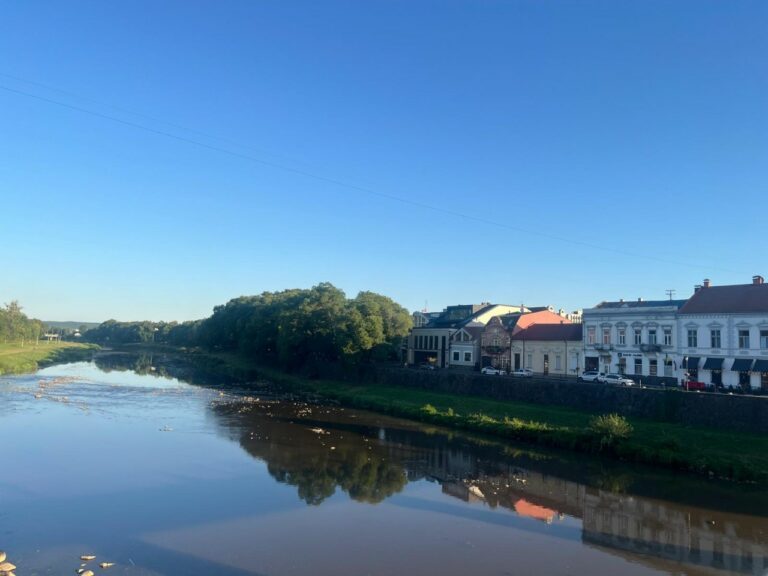
As the Uzh river winds through the foothills of the Eastern Carpathians, these Ukrainian waters find itself ushered by the ornate bridges and cobblestone staircases into the capital of the Zacarpattian Oblast: Uzhhorod.
This city has fallen under control of countless different regimes: from the Dacian invasion under the rule of Burebista in the first century BC to the permanent settlements of the White Croats in the 7th century; from 9th century Hungarian conquests to Habsburg rule under the Austro-Hungarian Empire.
In the 20th century, the city passed through the hands Czechoslovakia and Hungary. It was invaded by Nazi Germany and then occupied by the Soviet Union following World War II. Uzzhorod is now located in independent Ukraine on the border of Slovakia 🇸🇰
The city is home to 120,000 residents from diverse backgrounds. These demographics are reflective of its transient history: 77% Ukrainian (including Rusyns), 12% Russian, 7% Hungarian, 1.3% Romani. The city was once a prominent Jewish center ✡️
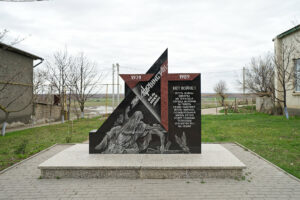
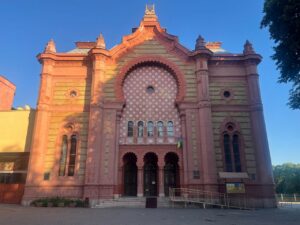
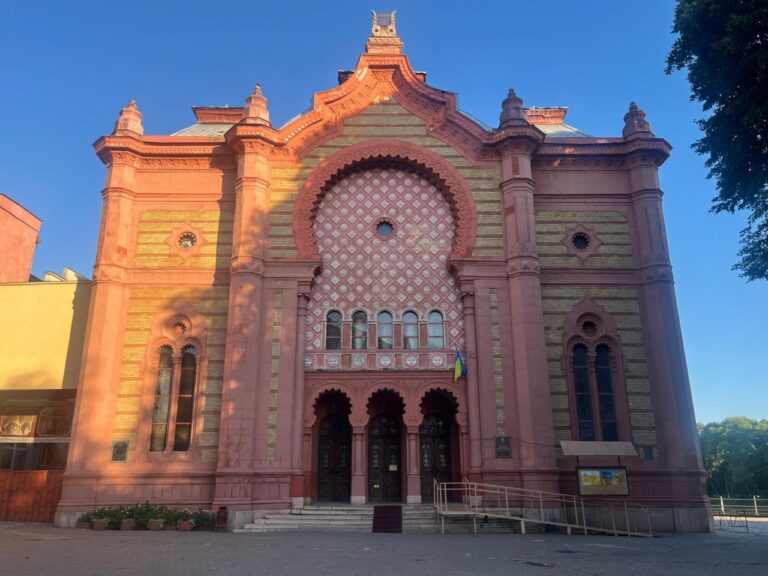
In 1941, there were 9,576 Jewish people living in Uzhhorod, making up 27.2% of the total population. However, following the deportation and excecution of the Jewish population in 1944, only a few hundred remained. The vibrancy of the historic Jewish community is still aparent in the surviving architecture of the city, including the synagogue converted into the Transcarpathian Regional Philharmonic and the Hebrew School located in one of the departments of Uzhorod National University on Voloshyna Street.
The territory of modern Uzzhorod has been witness to a history as ancient as human civilization itself.
This salient history is apparent everywhere in the city: from the Stone Age artifacts housed at Uzhhorod National University to the 12th century stone relic perched atop Zamkova hill–Uzhhorod Castle.
In the old town, Hungarian relics meet 20th century Czechoslovakian architecture. Across the river, wide Stalinist boulevards, Soviet modernism, and Krushchevka apartments contrast the old city’s quaint European charm.
The city’s ongoing efforts towards ‘Decommunization’ are noticable. Streets have been renamed and statues with the likeness of Russian historical figures torn down.
Overall, Uzhhorod is a testament to the fierce survival of the local. Beyond transient borders and shifting populations, the spirit of Uzhhorod remained steadfast, a reminder of the importance and power of place.
Photos and information from my conference in Uzhhorod in August 2025