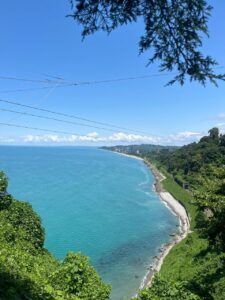
The prominent Black Sea port city has recently undergone a drastic change as the city’s architectural heritage has been compromised for the sake of modernization to increase tourism to Batumi.
These changes mark the disruption of Batumi’s urban fabric, marked by its homogeneity having been developed primarily during the late 19th century. Its original architecture reflects this period; neo-classical, baroque, renaissance, and gothic buildings dot the city’s unique landscape.
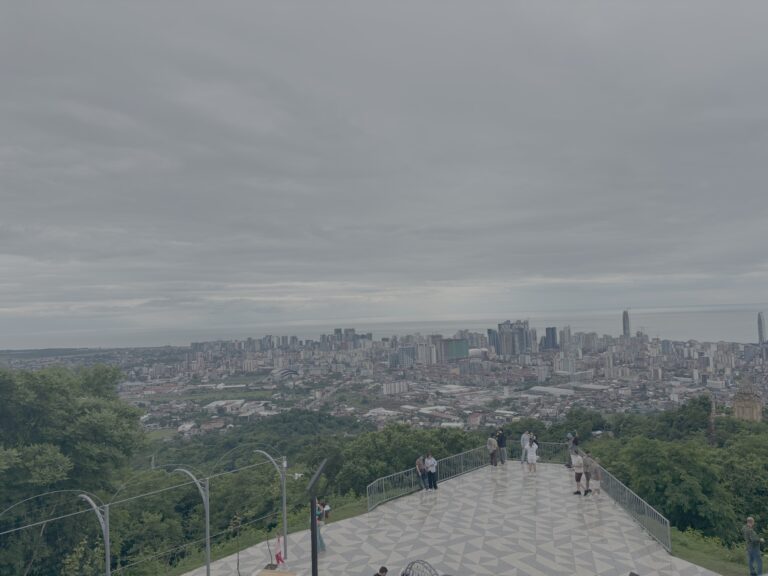
As of 2009, new construction dominates the coastal city. Metallic high rises and skyscrapers echo in a new era of architectural development and bring an entirely new sense of place to the city. But perhaps this city, marked by the transient nature of port cities, has long been in a state of transformation and disruption of tradition.
The transience of the city is brought its export economy. Batumi began being developed in the second half of the 19th century due to increasing economic development from the opening of “Porto Franco” in 1878 serving as a point of oil transport from Baku to the rest of the world.
Thus, Batumi existed as a nexus of East and West. By 1898, exported goods exceeded 24 million Rubles.
The endless flow of cargos and tankers into the port means the movement of not only goods, but also the people who work those ships. Sailing is a common profession in Batumi given its status as a port city and the presence of the Batumi State Maritime Academy in the city.
During the Soviet era, while the rest of the population faced closed borders, sailors lived mobile lifestyles and had access to foreign goods, giving the profession a special prestige. Since the collapse of the Soviet Union, people seek out this profession out of material motivation, a relic of the economic hardships faced in the 1990s.
The prominence of the seafaring profession means the city’s population is in a constant state of separation and reunification. Thus, the seafaring lifestyle both influences the identity of the economy and challenges the very basis of traditional family life and culture in Georgia.
In particular, traditional gender roles are challenged and transformed as, during their husband’s long expeditions abroad, wives gain independence while remaining confined to traditional marital frameworks. Seafaring also influences community structures. Wives and families of seafarers have formed close relationships with each other, offering support for the difficulties caused by separation.
Thus, Batumi as a city represents the sometimes uncomfortable confrontation between modernity and tradition, both in its architecture and the lives lived by its residents.
It calls us to question which aspects of tradition and heritage should be protected and which must be adapted for the sake of survival.